
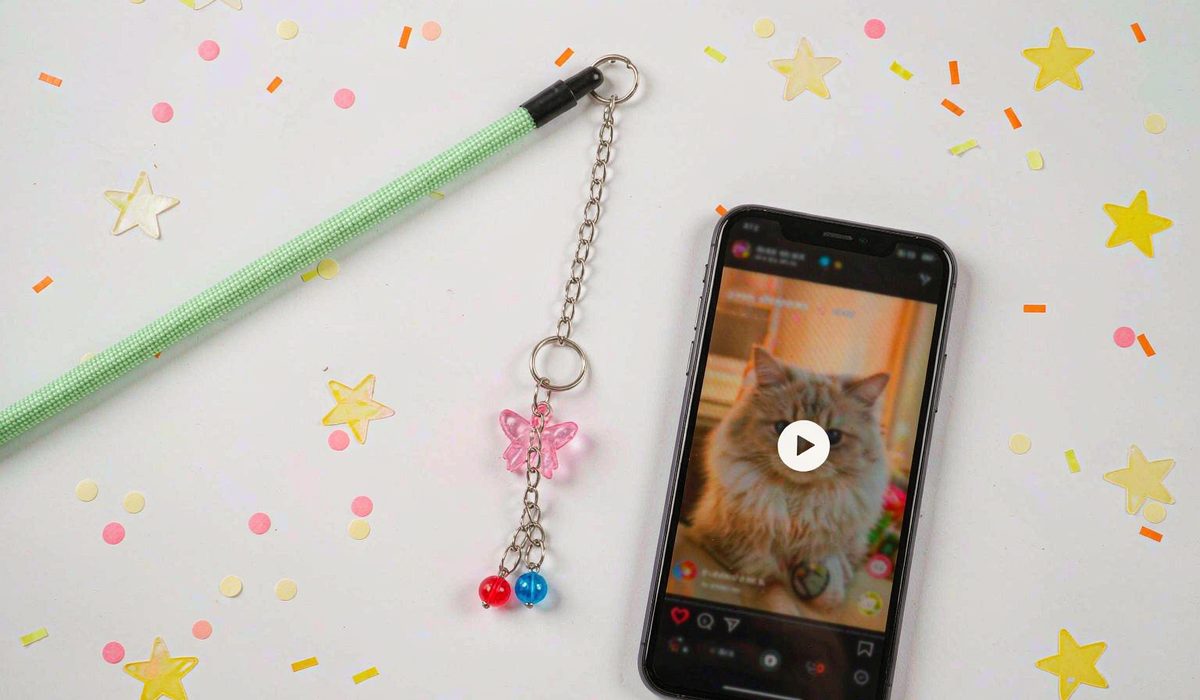
TikTok does not just sell pet products — it manufactures demand almost overnight. A single clip of a dog reacting to a new toy, a cat addicted to a grooming arch, or an owner demonstrating a “why didn’t I think of that” gadget can move a completely unknown SKU from zero to thousands of units in a matter of weeks. The sellers who win in this environment are rarely the ones with the biggest ad budget. They are the ones who see a trend in week one and have inventory ready by week three. This guide lays out a repeatable system to catch the next viral pet SKU before the category saturates and the margin disappears.
Why “early” matters more than “perfect”
By the time a product is “obviously” trending on Amazon — topping Best Sellers Rank, flooded with Sponsored placements, reviewed by every major pet influencer — the search term is already crowded and the arbitrage is gone. The commercial window on TikTok is short and brutal: typically three to six weeks from the first visible spike to mainstream saturation. The first sellers to list capture a 50–60% margin and organic velocity; the latecomers arrive to a race-to-the-bottom price war where the only winner is the platform.
The asymmetry is the whole game. A trend that you can validate in days and source in two to three weeks lets you ride the ascending curve. A trend you discover after it has been covered by three roundup videos is one you will be discounting to clear. The goal is not to be first to invent a product; it is to be first to recognize a product that is already organically taking off and to be ready to sell it while demand is still climbing.
The three signals that actually predict a spike
Most “trend spotting” advice is vague. In practice, you can train yourself to read three concrete signals that separate a durable微型 hit from background noise.
1. Repeat hashtag velocity
Track a short, fixed list of pet hashtags weekly — for example #petproducts, #dogtiktok, #cattok, #petgadget, #amazonfinds. A product that shows up in five or more distinct creator videos within a single week is warming up; it is not a one-off. Velocity matters more than total volume: a slow trickle of the same item across many accounts is a far stronger signal than one viral video from a single creator.
2. Comment intent, not likes
Likes measure attention; comments that ask “where can I buy this?” measure purchase intent. When a video’s comment section fills with buying questions rather than jokes, you are looking at a ready-to-convert audience. Savvy sellers scroll the comments before the likes. A clip with 40,000 likes and three “link?” comments is weaker than one with 8,000 likes and fifty purchase questions.
3. Cross-platform leak
When the same item surfaces independently in Instagram Reels, Pinterest saves, and Reddit threads, the trend has legs beyond a single algorithm. Single-platform spikes can be manufactured or flukes; a product that leaks across platforms is being independently validated by different audiences, which makes it materially safer to back with inventory.
Build a 10-day response loop
Recognition is useless without a fast, rehearsed operating procedure. The sellers who consistently capture trends run a disciplined 10-day loop. The exact steps matter less than the fact that they are pre-agreed, so nobody is asking “who owns this?” while the window closes.
| Stage | Action | Owner | Exit criteria |
|---|---|---|---|
| Day 0–2 | Log the product, save 3 example videos, note the format and the “hook” | You | A one-page note with links and a hypothesis |
| Day 3–5 | Request a sample or pre-order a small batch from a flexible-MOQ supplier | Sourcing | Sample in transit or small batch committed |
| Day 6–10 | If the trend holds, commit to a larger run and brief UGC creators | Marketing | Larger PO placed; content shoot scheduled |
The reason this works is that it front-loads commitment while keeping the downside small. Days 0–5 cost you almost nothing but attention. Only after the signal survives do you put real money into a production run. This is how you stay early without betting the farm on every flicker.
A worked example: the “cat self-grooming arch” curve
Consider a product we tracked closely: the wall- and floor-mounted cat self-grooming arch. In week one it appeared in a handful of cat-owner videos with modest views. By week two the same item showed up across independent creators, and the comment sections shifted from “cute” to “I need this.” By week three, search volume on Amazon began to climb. Sellers who had sampled in week one and listed by week three captured the ascending search curve; sellers who waited for “proof” arrived in week five to a listing crowded with look-alikes and falling prices. The pattern repeats: early recognition, fast sampling, then scale.
Where TikTok trends go after they peak
A common mistake is treating a TikTok hit as a one-week flash. Many of the strongest pet products developed on TikTok keep selling for months on Amazon and independent stores as the organic search demand builds. The play is two-phase: capture the spike with fast inventory and UGC, then harvest the steady-state search demand with a well-optimized listing. Cross-listing proven winners to Amazon is how you turn a six-week frenzy into a durable SKU. See our playbook on turning TikTok pet trends into steady sales for the full cross-platform sequence.
Tools and a lightweight weekly habit
You do not need expensive software to start. A 30-minute weekly ritual beats a quarterly “trend report”:
- Monday: Scroll your fixed hashtag list; screenshot anything repeating; drop it into a shared tracker.
- Wednesday: Check whether any tracked item has leaked to Instagram or Pinterest.
- Friday: Review comment intent on the week’s candidates; promote the strongest to a sample request.
Over a month, this habit builds a pattern-recognition muscle that no dashboard can replace. The sellers who win are not luckier; they are simply looking on a schedule.
Common traps that waste the window
- Over-validating. Waiting for “proof” from a paid tool often means waiting until it is too late. Two independent organic signals are enough to sample.
- Over-committing. Betting a full container on day one ignores that some spikes fizzle. Scale only after the 10-day loop confirms.
- Ignoring the hook. The reason a product goes viral is often the demo format, not the item itself. Replicate the format in your own content or the momentum won’t transfer.
FAQ
How early is “early enough”?
Aim to have inventory or a pre-order live within 10–14 days of the first consistent signal. Past that, you are competing with everyone who saw the same video, and the margin compresses quickly.
Can I reuse the same product on Amazon later?
Yes. Many TikTok winners keep selling on Amazon for months as organic search demand builds. Keep the listing ready so you capture both waves — the spike and the steady-state search.
What if I can’t source fast enough?
Then offer a pre-order or a “notify me” waitlist during the spike to capture emails and demand, and fulfill once production lands. A waitlist is better than being invisible during the peak.
Measuring what worked so you improve next time
Every trend cycle is a tuition payment unless you learn from it. After a product peaks, run a five-minute retro: did we sample within the 10-day window? Did our content replicate the original hook? Did the listing capture the steady-state search? The sellers who compound are the ones who treat each trend as a controlled experiment with a written debrief, not a one-off lucky hit. Over a year, that institutional memory is worth more than any single product.
Scaling the winner without losing margin
When a SKU proves durable, resist the urge to slash price to “win” the category. Margin is the point. Instead, defend it with bundling (arch + refill, toy + treat), with a stronger brand presentation, and with the speed advantage you earned by being early. Late entrants will undercut; your job is to be the product they are compared against, not the one they beat on price. Early movers who scale thoughtfully keep 10–15 points more margin than the crowd that arrives late.
When not to chase a trend
Discipline is knowing what to skip. Skip a trend if your lead time can’t beat the window, if the product needs certification you don’t have, or if the only differentiator is price. A trend you can’t execute cleanly is someone else’s opportunity, not yours. The goal is a high hit-rate on trends you’re actually equipped to win — not a trophy wall of near-misses.
The 80/20 of trend spotting
If you take only one idea from this guide, take this: most of your wins will come from a small fraction of the signals you track. You do not need to monitor everything — you need to monitor the few signals that have repeatedly preceded a spike for your category and act on those without hesitation. A seller watching ten hashtags loosely learns less than one watching three hashtags on a fixed weekly ritual. Depth and consistency beat breadth. The 80/20 here is real: 20% of your tracking discipline produces 80% of your early entries, and the rest is noise you can safely ignore once the habit is set.
Need a sourcing partner who can move from sample to shelf in weeks, not months? Talk to our team about low-MOQ private label for fast-moving pet trends. Explore our cat range and dog range for current best-sellers.





