
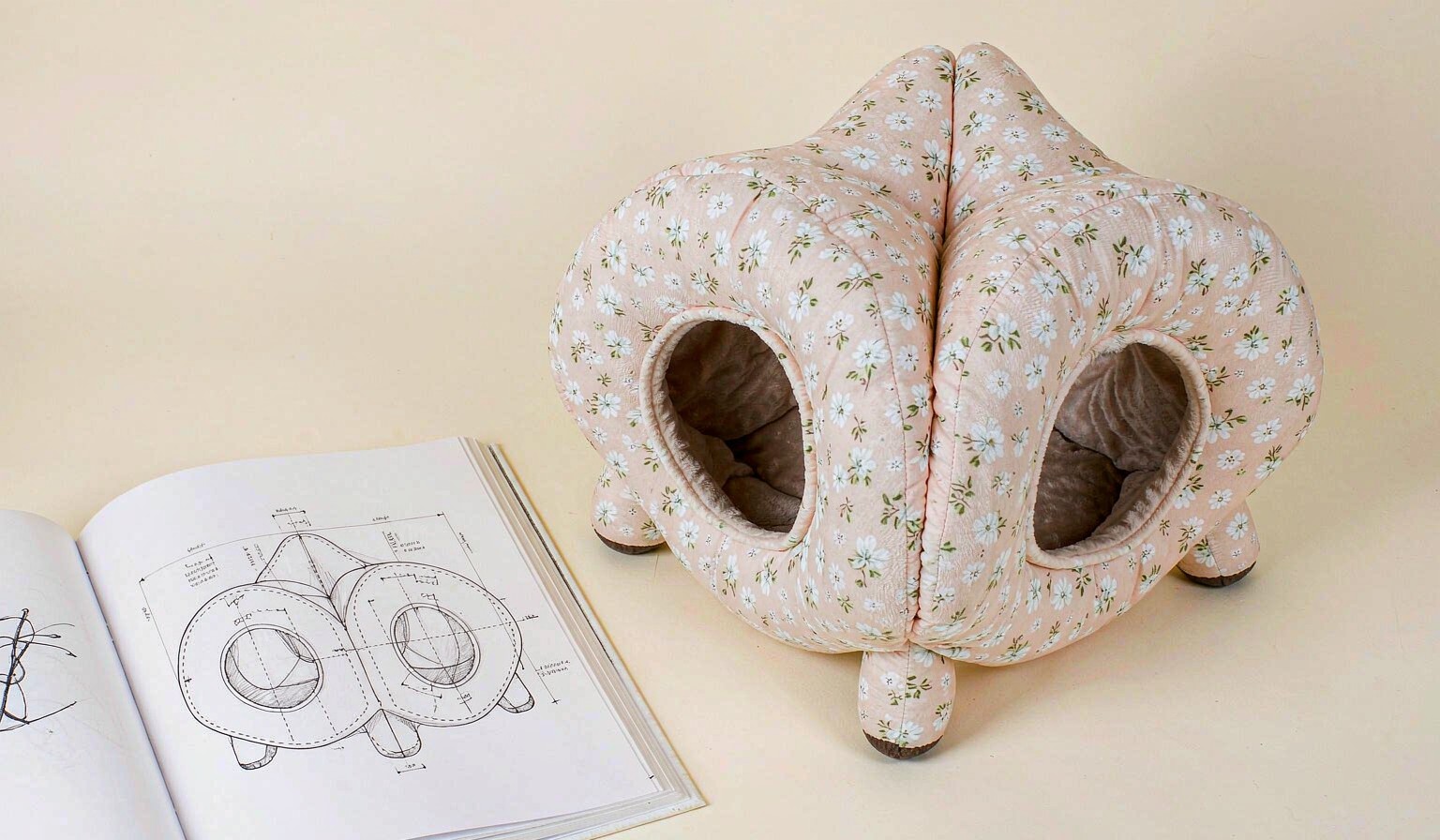
Every product in a cat’s life begins as a problem someone noticed. The cat tunnel we are about to follow started with a complaint we overheard in 2022: a DTC seller told us her customers loved crinkle tunnels, but the cheap ones collapsed flat after a month and the cats lost interest. “They want a tunnel that holds its shape and still makes the noise,” she said. “Nobody’s making that.”
So we made one. This is the story of how that tunnel traveled from a napkin sketch to a shelf in a warehouse in Ohio, and why the boring middle steps — the ones no listing photo ever shows — are the ones that decide whether a cat actually plays with it.
The Sketch and the Argument
The first sketch was drawn on the back of a receipt by our product lead, Wei, during a lunch break. It was a three-way intersecting tunnel with a crinkle layer sandwiched between two stabilizer rings. The argument that followed was not about looks. It was about physics.
Wei wanted rigid internal rings so the tunnel would not pancake. Our factory contact, Lao Hu, argued that rigid rings made shipping bulky and doubled the carton size. For ten days they traded voice notes — Wei sending cat videos of tunnels collapsing, Lao Hu sending carton dimension math. The compromise they reached is still in the product: a flexible but spring-steel ring that ships flat and pops into shape in two seconds. That single decision cut shipping volume by 38% and is the reason the tunnel is profitable to send overseas at all.
Choosing Materials a Cat Would Forgive
Cats are unforgiving product testers. They chew, they claw, they pee on things. So the material choice was treated seriously, not as a cost line.
We tested four fabrics. A shiny polyester looked great in photos but slipped under paws and made older cats nervous. A bonded fleece was cozy but trapped crinkle sound and dulled the very noise cats loved. The winner was a dual-layer woven canvas with a crinkle film laminated inside — tough enough to survive claws, soft enough to invite naps, and loud enough to trigger the pounce. We documented the choice in a one-page spec sheet that now travels with every production batch, and you can see the finished family of designs in our cat toys collection.
A small table of what we tested and why:
| Fabric option | Verdict | Reason |
|---|---|---|
| Shiny polyester | Rejected | Slipped under paws, stressed cats |
| Bonded fleece | Rejected | Dulled crinkle sound |
| Thin nylon | Rejected | Tore at seam under clawing |
| Dual-layer canvas + crinkle film | Selected | Durable, loud, nap-friendly |
The First Samples and the Cat Who Hated Them
Our first physical samples arrived in March 2022. We did what every serious pet brand should do and still too few do: we gave them to real cats. Wei brought three tunnels to a friend’s cafe that allows pets, and watched for an hour.
One cat, a grumpy tabby named Mapo, walked in, sniffed the entrance, and turned around. The tunnel’s opening was too small — Mapo’s whiskers brushed the sides and she refused. We had measured for a kitten, not a full-grown cat. The opening went from 22 cm to 28 cm in the next revision. That change, invisible in a product photo, is the difference between a cat who enters and a cat who judges and leaves.
A second cat, a nervous rescue named Bao, taught us something different. He loved the tunnel but froze at the crinkle the first time it sounded. We watched him retreat, then creep back, then pounce — and realized the noise was part of the play, not a flaw to engineer away. That observation shaped how we describe the product later: we stopped calling it “quiet” or “loud” and started calling it “rewarding,” because the cat’s own hesitation-then-attack loop is exactly what makes a tunnel worth owning. The best feedback, we learned, is the kind a cat gives without meaning to.
The Factory Floor Visit
In April 2022, two of us took a train to the workshop that would sew the tunnels. We did not go to inspect — we went to learn. Watching the line, we noticed the crinkle film was being cut a centimeter short on one side, so the seam caught it and created a weak ridge. The workers were not being careless; the cutting template was misaligned by a single bolt.
We spent the afternoon with the floor manager resetting the template. Production of 3,000 units had not yet started, so the fix cost nothing but a train ticket and a willingness to stand on concrete for four hours. If we had skipped that visit, 3,000 tunnels would have shipped with a flaw no customer could name but every cat could feel.
On the train home that evening, Wei sketched a one-page “floor visit” checklist on the same receipt-paper habit he had started with — opening diameter, seam pull, crinkle test, template alignment — and taped it inside his notebook. That checklist is now part of how every Elieben product is released, and it exists only because a single bolt, a centimeter off, happened to be caught by someone who bothered to look.
Quality Checks Before the Shelf
The tunnel now runs through a checklist we built from every mistake above. Before a batch leaves, our team photographs the opening diameter, pulls the seam by hand, and crinkles the fabric to confirm the sound carries. A batch of 4,000 units in late 2022 caught 60 tunnels with off-center rings; we pulled them, the factory reworked the jig, and the rest shipped clean.
That same tunnel now sits in our broader cat products range and has quietly become a repeat-order item for three Amazon sellers who started with a single test unit. One of them told us it appears in more customer photos than any other SKU they carry — which, for a product whose only job is to make a cat play, is the only review that matters.
From Shelf to Story
When the tunnel reached that Ohio warehouse in early 2023, it carried no label explaining the whisker-width opening or the spring-steel ring. It just worked. That, to us, is the whole point of product development: the customer should never have to know the argument about shipping volume or the grumpy tabby named Mapo. They should just watch their cat disappear into a tunnel, hear the crinkle, and smile.
We tell this story not to show off a tunnel, but to show what “behind the product” actually means — a chain of small, invisible decisions made by people who care whether the cat enters or walks away.
Key Takeaways
- The best design decisions are arguments resolved with data — Wei’s videos vs. Lao Hu’s carton math produced a flat-shipping spring ring.
- Material choice is a cat-behavior problem, not a cost line; test fabrics against how cats actually move and sound.
- Real cats (even a grumpy tabby named Mapo) are the only honest prototype testers — widen the opening when whiskers brush.
- Stand on the factory floor before production starts; a misaligned bolt is free to fix early and expensive later.
- The customer should never feel the engineering — they should just see their cat play.
At Elieben we treat every SKU as a small story with a cat at the end of it. The tunnel’s journey from a receipt sketch to a Ohio shelf is one of dozens we could tell, and each one reinforces the same quiet belief: the products worth selling are the ones someone stood on a concrete floor to get right. We are happy to walk that floor with you, and to tell you the truth about the tunnel before your cat — or your customer — ever meets it.





